Arrival and clearance
Great Bay or Simpson Bay Lagoon
Compare Great Bay and the lagoon by access, work alongside, guest movements and departure flexibility, then build a berth brief around the actual call.
Read4 min
ForCaptain · Yacht manager
Reviewed9 September 2026
On this page
The most useful berth is the one that lets the yacht complete its work and leave when it needs to. An engineering stop, an owner visit and a rapid turnaround can favour different locations even for the same vessel. Great Bay and Simpson Bay Lagoon should therefore be compared as working bases, with the full call in view.
What the berth needs to support
Separate the requirements that determine whether the call is possible from the preferences that make it more comfortable. Access dimensions and sufficient electrical supply may be essential; proximity to one restaurant or contractor may be convenient. This keeps an attractive location from winning the comparison before the limiting questions have been answered.
A berth enquiry becomes more useful when it describes the operation. A fuel stop needs an accepted transfer arrangement; a maintenance visit may need space, contractor access and permission for particular work. With guests aboard, the same quay also becomes an arrival point, a privacy boundary and a route for luggage.
What direct access changes in Great Bay
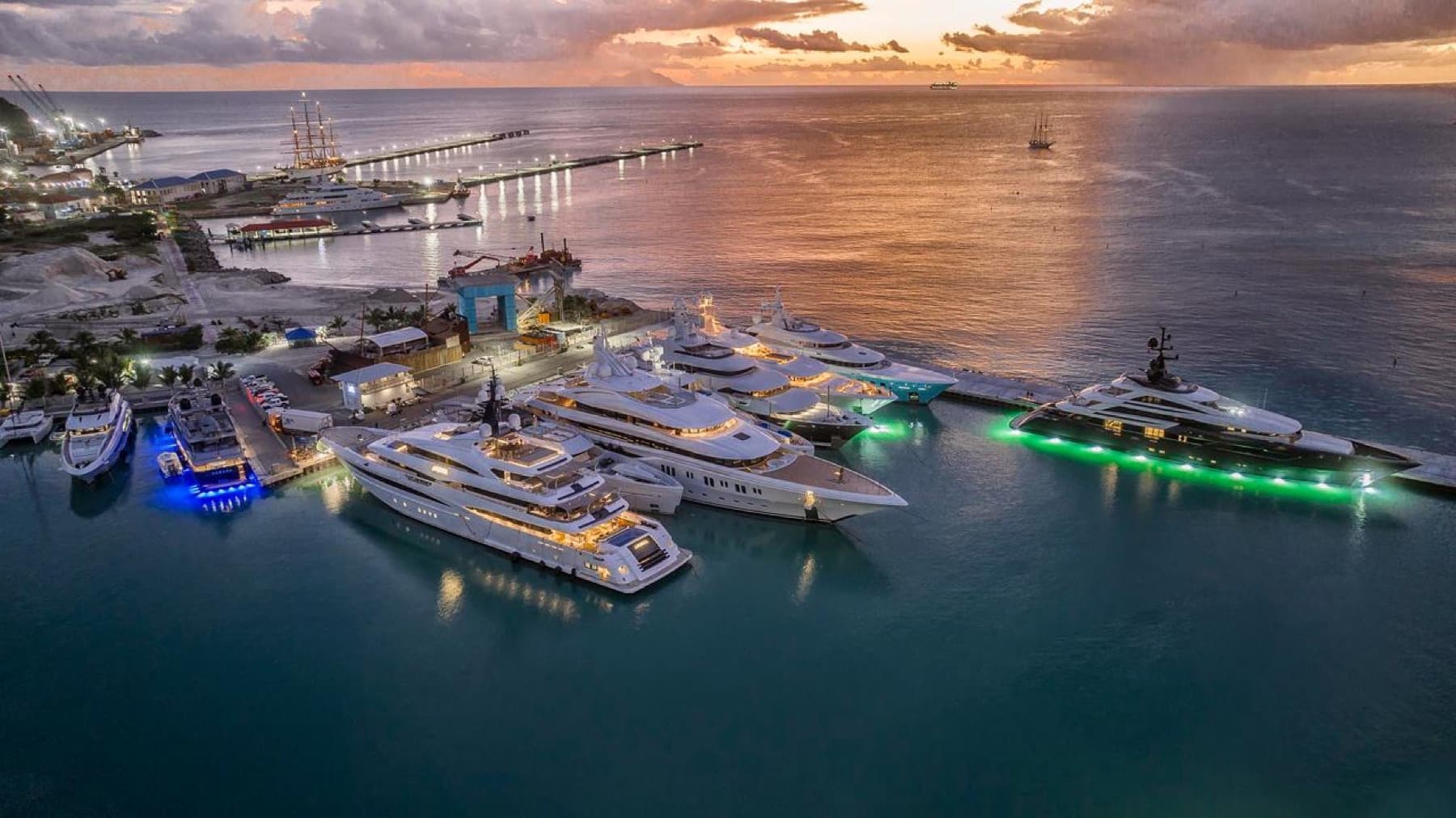
Great Bay avoids a Simpson Bay Bridge transit. That removes one scheduled dependency from arrival and departure, which matters when the yacht has little timing flexibility or when lagoon access is unsuitable. It does not remove port traffic, berth acceptance, weather or clearance from the plan.
Port St Maarten’s yachting information describes the Windjammer berths and the possibility of other port berthing. Treat the listed dimensions and facilities as a starting point for an enquiry. The allocated berth, present conditions and permitted operations need to be established for the particular vessel.
For a call involving an anchorage, look beyond the position on a map. The usable connection to shore depends on the tender landing, expected conditions, luggage and stores, and who can receive each movement. A short distance across the bay does not make every transfer equally practical.
What a lagoon berth changes
A lagoon marina can put the yacht close to several shore tasks, but its value depends on reaching the allocated berth and using the services there. The entrance, any further bridge crossing and the marina approach form one route. Review them together using the vessel-access guide.
Published marina depth is not proof of depth throughout that route. Nor does a marina-wide service list establish that every pedestal, quay or berth has the same facilities. Ask for the specific location and requirements to be accepted together, particularly if power, hose reach or a large delivery vehicle determines whether the stop works.
Compare a complete day alongside
Build a simple picture of the busiest part of the visit: who is coming aboard, which services are connected, what work is underway and when guests need access. If several jobs share the passerelle or receiving team, their apparent proximity may not save time. Sequencing can matter more than being closest to a supplier.
Electrical compatibility is especially easy to hide behind the phrase “shore power available”. Use the shore-power guide to turn that into an answer about the yacht and its actual load.
Build a Sea Grapes berth brief with the vessel particulars, required services and latest acceptable departure. Include an acceptable alternative area and explain what would make it usable. That gives the berth discussion a practical fallback if the first choice cannot accommodate the whole call.
Information for a useful berth enquiry
- LOA, maximum beam, actual arrival draft, air draft and GT.
- Arrival and departure windows, including flexibility.
- Shore-power voltage, phase, frequency and amperage.
- Fuel, water and waste requirements.
- Guest, crew, freight and contractor movements.
- Security, tender, passerelle and maintenance requirements.
- A preferred location and an acceptable alternative.
Sources
Sources checked 9 September 2026.
Related guidance
Your yacht. One agency.
Bring the plan together
Send your yacht, dates and the details you would like us to arrange.